
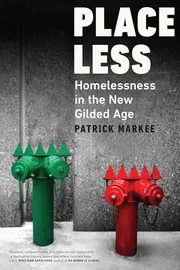

Researchers too often dismiss homelessness as a social problem that will “always be with us.” But the truth is far more complex. Drawing on historical analysis, policy research, and his own experiences working with homeless people, Markee argues that modern mass homelessness is an offshoot of the neoliberal agenda that has overtaken American politics. He begins by suggesting that the current “New Gilded Age” era mirrors the original Gilded Age’s extreme inequalities. Taking New York as his starting point, Markee examines the relationship between urban homelessness to economic crises like the Panic of 1873 and the Great Depression. Both led to dispossession, especially among those already made vulnerable by race or class, but it was not until the recession of the 1970s—and the brutal policies of austerity that defined it—that the modern phenomenon of mass homelessness emerged. Yet the problem was never linked to systemic/policy failures that resulted in, for example, the loss of affordable housing or the deinstitutionalization of the mentally ill. Rather, blame was laid on homeless people themselves, who were categorized as a blight on urban spaces and demonized as criminals. From New York, mass homelessness spread to other cities across the United States during the 1980s as a pro-capitalist Reagan administration laid the foundation for Trumpian “oligarchical ethnonationalism.” Despite the current dominance of neoliberalism, Markee holds out hope that more compassionate policies—like laws ensuring the right to shelter—can return incrementally through continued social activism that remembers the sacrifices of homeless people Markee memorializes by name throughout the book.