
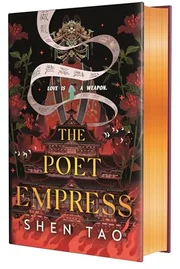

When the ailing emperor of Tensha names Terren, his second son, as his heir, a search begins for young women to serve as concubines. Despite reports of Terren’s sadism, Yin Wei, the 16-year-old daughter of a rice farmer, presents herself as a candidate, hoping to secure gifts for her famine-ravaged village and a chance for her younger brother to go to school. When the court’s representative dismisses her as a joke, she responds, “Then let the prince laugh.” Her plea works—and reveals the quick wit and strength of character that ensures her survival in a court where no one can be trusted. After Terren selects Wei to be his Empress-in-Waiting, he regularly subjects her to violence, including that of his magic blades. Fearing for the future of Tensha under his erratic tyranny, Wei determines to compose a heart-spirit poem, which, if used at the right moment, could kill him. Doing so requires Wei not only to learn literomancy—writing poems with the power of spells—in a world where literacy for women is criminal, but also to become deeply familiar with Terren, and thus able to find the words to strike directly at his heart. The story of his past is grotesque, and reveals the way that wrangling for dynastic power destroys families and brings ruin upon a nation; but Terren’s dark history is less compelling than Wei’s steadfast pursuit of it. Resilient and clever, Wei is the heart of the novel, striving to navigate a world of lies and cruelty without becoming cruel herself. She learns to wield power with fidelity to her purpose, and though the novel’s title alludes to her triumph, the story is full of page-turning suspense.