
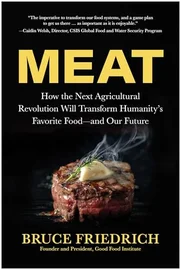

Agriculture, which is overwhelmingly dominated by the meat industry, is growing so robustly that it will “wipe out all of the world’s forests and savannas” by 2050, reports Friedrich, founder and president of the nonprofit Good Food Institute. Among the disasters already occurring are the pollution of lakes, seas, and oceans due to field runoff; the devastating decline of biodiversity; increasing zoonotic diseases and global pandemics; and the uncontrolled release of climate change-causing carbon. All told, it takes nine calories of crops to make one calorie of chicken, “a staggering amount of food to produce food,” the author notes. But there is hope. Alternatives being developed include plant-based meat; cultivated meat using animal cells; and genetic engineering of meat proteins to bulk up other foods. Around 2020, a few countries, including Singapore, Israel, and Japan, began tackling this new endeavor, including its biggest challenge: making such “alternative meats” taste exactly like real meat. So far, this has not happened—and that is the only way such a paradigm-shifting market can take off. But the author, who grew up in Oklahoma—“the land of cattle and steak houses”—makes many indisputable points. Cars replaced horse buggies shortly after their invention. Cell phones replaced landline phones shortly after their invention. Furthermore, we once freaked out about “artificial ice”—“The natural ice industry branded artificial ice as impure, unnatural, and inferior”—and “artificial light” generated by Thomas Edison’s strange bulbs. But we got over it all. If the price—and the taste—is right, we may—may—get over meatless Big Macs and lab-grown Whoppers.