
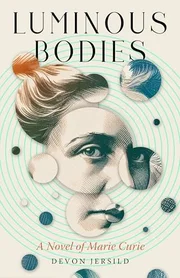

Curie’s pioneering research into radioactivity is the hallmark of her astounding career and, in this vivid work of historical fiction, Jersild, a writer and psychologist, imagines what her inner thoughts and desires might have been. She does this so well that Curie feels alive. Excavating Curie’s life, Jersild lets readers experience the sexism and misogyny that permeated the scientific world in the early 20th century. Curie was the first woman to win the Nobel Prize and the first person to win two Nobels, yet she was berated as selfish and unfeminine and “merely” the widow of another scientist. Jersild recreates the way this might have made Curie feel and how it never stopped her from doing the research to which she dedicated her life. Curie’s scientific work was complex and not easy for a layperson to understand, and Jersild wisely keeps the terminology and details of experiments to a minimum without undermining their complexity and nuance. She focuses strongly on the things that shaped Curie: her childhood in Poland; the early loss of her mother; her shortened marriage to Pierre Curie, who died in a freak accident; and, more provocatively, a love affair after her husband’s death with a married scientist that nearly toppled her (but not his) career. With a gimlet eye, Jersild uses this affair to spotlight the double standards to which male and female scientists were held and the way Curie, understandably devastated by her treatment by journalists and the public, managed to pull herself back into her research and new discoveries through the force of her will.