
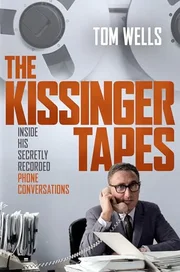

Henry Kissinger (1923-2023) began taping conversations—for recordkeeping and for his memoirs—as soon as he was appointed national security advisor in 1969, continuing after he was appointed secretary of state and stopping only when he left office in 1976. Conversation, even from educated speakers, is ungrammatical, repetitious, and cliché-ridden, so journalist Wells, author of Wild Man: The Life and Times of Daniel Ellsberg (2001), provides introductions, summaries, and, now and then, a straightforward transcription. He has converted seven years of taping into nearly 600 pages of text, and few readers will yearn for more. Richard Nixon took office in 1969, having promised to end the Vietnam War by the 1972 presidential election. The minutiae of negotiations leading to the January 1973 peace agreement occupies most of the text, and readers will be no less frustrated than the American public during the process. The Middle East has been a graveyard of reputations, but Kissinger did not lose points because powerful blocs supported whatever side he favored at the time. Ironically, the administration’s greatest accomplishment, opening relations with Red China, receives only a rare mention because, working furtively, participants avoided the telephone. Nixon does say that his China policy bothers liberal critics: “Oh, this drives ’em nuts, Henry.” Although occasionally entertaining—and no doubt an important primary source for scholars—many of these conversations will be a slog for the general reader who might expect fireworks but will encounter mostly complaints, tactical advice, abuse of rivals and the media, and an obsession with leaks.