
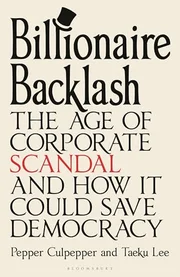

People are ticked off these days, observe Culpepper and Lee, with “enormous wellsprings of pent-up democratic pressure just looking for a way to get out.” As their narrative opens, they examine a predecessor event that uncorked similar pressure: namely, the reaction against the meat industry when, in 1906, Upton Sinclair published The Jungle, documented the “ground-up poisoned rats” and putrefied canned meat that slaughterhouses were foisting on consumers. Two things are worthy of note there, the authors hold. The first is that rebellion against the status quo begins with a muckraker, an “obsessively committed individual who could focus inchoate public anger around a specific set of demands”—in that case, for safe food. The second is that the target of that anger is a corporation, an entity capable of being criticized by people with “shared moral outrage.” So it was that Dieselgate came down in 2015, when an American engineer calculated that German auto manufacturers were cheating on emissions standards, and, after consumer protests, drew down fines against Volkswagen alone totaling more than $32 billion. Goldman Sachs and Enron collapsed around scandals, while the Cambridge Analytica case brought about significant legislative reforms around privacy. As the authors note, not every scandal seems to have legs: Although U.S. Sen. Sheldon Whitehouse uncovered a “smoking gun” that showed that Big Oil was well aware of deleterious climate change half a century ago, the public has not exploded in response. Still, corporations do best, the authors assert, when they “stick to what they are good at,” delivering goods and services without muddling the political landscape with special pleading, leaving political questions the “subject of informed debate between voters, not determined by the whims of the leaders of large companies.”