
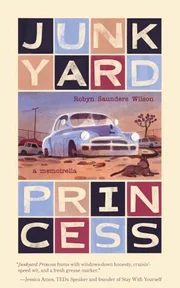

“Four acres, steel fence, two warehouses, three forklifts, one-thousand cars, and a junkyard dog”; for the temperamental, uneducated Harry Saunders, his new wrecking yard in the desert was an empire to command. His 9-year-old daughter, Robyn, wrenched from suburban life in Laguna Beach, California, warmed up to it more slowly. She began working the junkyard counter as a tween, operating phone lines and locating parts despite knowing little about cars. Robyn was befriended by a rough posse of men, and Harry even let her drive a forklift once. But her little brother, Ryan, failed to thrive—he was savaged by the resident pack of guard dogs as a small child and later bonded with the ever-present tweakers selling scrap metal for meth funds. When the teenage Robyn salvaged a battered but stylish 1983 Honda Civic, her world opened. She listened to cool music on the radio and visited the ocean instead of attending school; away from the junkyard’s chaotic orbit, she explored a more creative path. But as the business lost money, her father became increasingly aggrieved, Ryan veered off course, and Robyn discovered that she could never fully escape her past. Saunders Wilson’s “memoirella” is brief, but even when lightly touching on subjects like familial sexual abuse and drug addiction, her story has impact. The author’s examination of her family and community grants grace and understanding to all. At restaurants, Harry harassed waitstaff, and the wrong word could cause him to flip over the dinner table at home—but his savagery obscured the early wound of abandonment. Ryan is a nemesis but also a confidant, wilding out with Robyn through the night and eating biscuits and gravy with her at dawn. The setting plays a pivotal role: Robyn left a safe “walled fortress” for a land of “misshapen” houses where the sky loses its “coastal blue tint,” and nature—in the form of the Pacific Ocean and Cal State San Bernardino’s forests—helped enable Robyn’s eventual escape.