
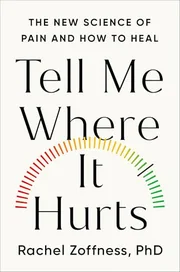

Zoffness, a clinical psychologist, here debunks many common beliefs about pain—those held by the general public and doctors alike. For starters, Zoffness bemoans that “for a variety of reasons, many to do with our profit-driven healthcare system, pain medicine remains rooted in the antiquated biomedical model. We continue to be treated as disconnected body parts, despite being housed in one hyperconnected body.” Pain, she writes, is too often viewed as a symptom of some other pathology, rather than a condition in its own right. The overarching theme of the book is that the sensation of pain, especially pain that endures, is influenced by psychological and social factors, in addition to widely accepted biological aspects. Zoffness notes that roughly “1.9 billion people around the globe currently live with chronic pain, 100 million in the US alone.” She adds that “pain costs the US $635 billion annually in medical costs and lost work productivity.” Practitioners prescribe treatments that might sound alternative or even woo-woo, such as breathing exercises and mindfulness. The hard part, the author admits, is convincing her patients—and here, her readers—that connecting physical symptoms with emotional health sometimes sounds too much like pain is all in one’s head. Zoffness backs up her stance with plenty of scientific evidence that’s delivered in understandable language and reinforced with real-life examples. Readers who have chronic pain—or know someone who has it—should find the author’s advice worthwhile. For those who are more familiar with Zoffness’ conception of pain, the book can feel a little repetitive, even as it provides solid argumentation.