
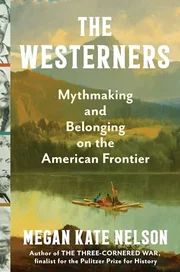

Every Western historian knows the name of Frederick Jackson Turner, who, in 1893, declared that the American frontier was closed. (It was just a year after Wounded Knee, after all, pretty well the closing shots of the American Indian Wars.) No one remembers Turner’s wife, Mae. Granted that she figures only slightly in Nelson’s narrative, Mae Turner is emblematic of the fact that women are often airbrushed out of Western history, apart from inevitable characters like Annie Oakley and Calamity Jane. Nelson restores women to history most vividly in her account of the Sonoran entrepreneur María Gertrudis Barceló, who settled in Santa Fe, at the upper reaches of New Spain, in 1815 and made a fortune as a saloon keeper, gambler, and businesswoman. Another of the seven chief players in Nelson’s account is the “Black Indian” Jim Beckwourth, a reliable go-between among white settlers and Indians along the Front Range of the Rockies until he made the unforgivable error of guiding a murderous militia to the site of a Cheyenne and Arapaho encampment that would give its name to the Sand Creek Massacre. Had he not, Beckwourth later told a group of Cheyenne leaders, “the white chief would have hung me.” The Cheyenne were unconvinced. Still another player in Nelson’s account was Polly Bemis, a Chinese immigrant who “embodied the characteristics of the white pioneer.” All were significant in their time, and all are largely forgotten today, and for various reasons, chief among them, by Nelson’s account, the flourishing of the myth of the frontier in Turner’s time and ever after, one that “whitened the West, and this transformation resulted in the oppression of Indigenous peoples, women of all races and ethnicities, and migrant communities.” While Nelson’s narrative sometimes plods, it makes a valuable corrective.