
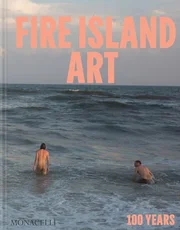

This illustrated feast frames Fire Island not simply as a queer sanctuary, but as an incubator of queer style across the 20th century. Dempsey, president of the Fire Island Pines Historical Society, is an engaging guide to a vibrant history: Readers learn that Oscar Wilde is said to have visited in Cherry Grove in 1882; same-sex couples danced at Duffy’s in the 1930s (“after the hotel’s owners went to bed”); and in 1952 Lone Hill was rebranded as Fire Island Pines, with lots advertised for as little as $275. Pilgrims followed, including W.H. Auden, Frank O’Hara, and Andrew Holleran (whose 1978 novel, Dancer From the Dance, supplies the perfect metaphor: “nothing but a sandbar, as slim as a parenthesis”). At its best, the book links libido to the aesthetics of sun, sand, sea, and skin: Richard Meyer writes about the artistic and sexual ménage à trois of Paul Cadmus, Jared French, and Margaret French (aka PaJaMa); Philip Gefter tells of a shy but excitable Richard Avedon gradually shedding his clothes; and Fabio Cherstich provides a vivid account of David Hockney’s 1975 summer sojourn, including a page from his scrapbook for host Arthur Lambert. The second half widens the lens: Andy Warhol’s diaries; Sam Ashby’s queer cinematic history (“a fantasy of a fantasy”); Ksenia M. Soboleva on lesbian absence; and a conversation between photographer Lola Flash and poet and actress Pamela Sneed about grief in the shadow of the AIDS epidemic. But while the 1980s haunts the edges, the thesis holds: As Thomas Mann wrote in Death in Venice, “We artists cannot tread the path of Beauty without Eros keeping company with us.”