
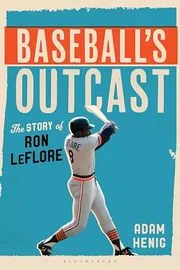

Henig, an industrious author of books on Black history, chronicles the remarkable life of Ron LeFlore, who was in prison before starring with the Detroit Tigers. Drawing on his interviews with LeFlore, the player’s 1978 memoir, and other sources, Henig evokes his subject’s tough boyhood in Detroit, a city hindered by discriminatory housing and job markets, industrial decline, and decreasing tax revenue. The six people in LeFlore’s family shared a one-bedroom apartment, where the children witnessed their father, a heavy drinker, beat their mother. At 10, LeFlore was drinking and smoking pot. He stole from local stores and eventually was convicted of armed robbery. Serving three-plus years in a Michigan prison, LeFlore distinguished himself on multiple fronts. Henig’s research reveals that, in addition to excelling in team sports, LeFlore notched a “genius caliber” score on an intelligence test. LeFlore “had never played catch with his father” or suited up for a high school baseball team, but foot speed, hard work, and the backing of a fellow prisoner with influential friends earned the Tigers’ attention. LeFlore’s story is inspiring, but Henig avoids hagiography, especially in his overview of LeFlore’s big-league career, which was the subject of a made-for-TV movie starring LeVar Burton. LeFlore had notable success as a hitter and base-stealer—and a knack for “sabotaging his own success” by partying, showing up late for games, and failing to stay in shape. Henig’s prose usually does the job, but he can be imprecise. He calls paid minor leaguers “future professionals” and credits LeFlore with 30 “consecutive hits” when he means that the player had base hits in 30 consecutive games. Baseball pedants will wince, but this book is otherwise sturdy.