
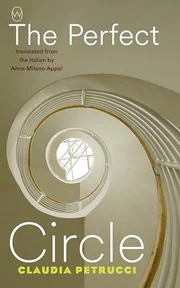

Irene Sartori sells foreclosed houses—from a palazzo in smoldering Rome to an expensive property in sinking Venice—to wealthy foreigners impervious to the dystopian climate catastrophe befalling Europe. Renowned in her field, Irene gets a mysterious call beckoning her to help sell an “unsellable” property in her hometown of Milan. The enchanting yet haunting spot, known as Via Saterna, is defined by its central staircase, giving the building a circular interior that defies its ordinary square-shaped exterior: “The Via Saterna project is based on that deception, on the assurance of a certain presumption in the eye of an onlooker and the subsequent unmasking of preconception, the crumbling of logical deduction.” Most intriguing, however, is Via Saterna’s unlikely inhabitant, Lidia, whose mysterious relationship to the house quickly takes over Irene’s life. As Irene tries to piece together the intertwined history of Lidia and Via Saterna, another narrative unfolds: one that begins decades prior when, according to the narrator, Lidia had a fatal fall down the house’s stairwell. The two concentric narratives—one moving forward in time and the other moving backward—create a gripping yet dizzying story that forces the reader to question its every detail. Both narratives oscillate between themes of birth and death, balancing the puzzle of Lidia’s alleged death with Irene’s personal journey into motherhood, which emphasizes the circularity of the novel’s timeline. The plot, like the house, is dotted with circular and geometric imagery: “I had waited forty years for the circle to close,” says the house’s owner as the novel ends.