
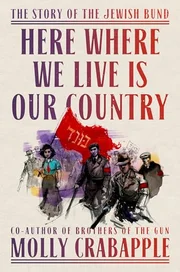

Founded by young revolutionaries in 1897 in what is now Vilnius, Lithuania, the Bund was “a sometimes-clandestine political party whose tenets were humane, socialist, secular, and defiantly Jewish,” as writer and artist Crabapple has it. Descended from Bundists and Puerto Rican radicals, Crabapple (née Caban) immediately connects the Bundist experience with modern leftist struggles: “The Bund fought for the very multiracial, democratic socialism that a new generation now champions.” Yet the Bund itself has disappeared. Some of its early proponents were scattered to what Crabapple calls “Exileland” in the “revolutionary diaspora” that followed pogroms, tsarist oppression, Cossack attacks, and the like; a few converted early on to Zionism and left for Palestine. More went there in the wake of the Holocaust, with the Bundist-led Warsaw Uprising having led to its own slaughter: “Their party had given them fairy tales,” Crabapple writes of the survivors. “Zionists offered a place where they could rebuild their lives.” In a sweeping narrative that urges anti-Zionism and Palestinian liberation while being, yes, defiantly Jewish, Crabapple follows in the Bundists’ path, finding herself in Lviv, Ukraine, wondering at the absence of Jews when the city was once a major Jewish center. “Things change,” a friend replies. So they do, but the same spirit that animated anti-tsarist revolution, union organizing in the new shtetls of New York, solidarity with other oppressed peoples, a profound commitment to self-improvement and learning, and a burning sense of justice clearly lives, at least in possibility: “The past is not dead. …It holds tight to our eternal present, sometimes invisibly, but ready to be reclaimed by those who need it.” Thanks to her book, richly illustrated with her own artwork, that reclamation is ready to hand.