
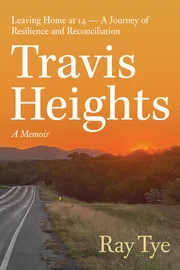

What’s unsaid often leaves the strongest impression, as Tye suggests in this unflinching account of growing up in 1970s Texas. The book’s title nods to the Austin neighborhood where his father moved him and his brother, Kenny, in June 1970. But the author’s hopes for stability there—after attending eight schools and living in 10 different areas—were crushed by the abusive actions of Beulah, his new stepmother. When she broke all his record albums and demanded that he quit his after-school library job, the author, weary of a life that was “turning into a fight of old versus new,” left home for good. The move would consign him to sleeping in secluded areas or on friends’ couches, even as he continued attending school and worked toward a better future. He quickly began maximizing his street smarts (“I learned that people treated me better if I didn’t have my pack with me”), which enabled him to gain a string of entry-level jobs and more stable living situations. However, the era’s casual feel-good ethos left the author feeling frustrated and unfulfilled. After he asked his latest girlfriend if they were in love, her jarring response (“Don’t get confused. It’s just sex”) only strengthened the loner’s emotional armor. Meanwhile, he was always aware that one mistake could land him in jail or back under Beulah’s unforgiving control. The point is driven home by one of the book’s funniest scenes, in which the author sheepishly confesses his age (just 16) to a clueless server demanding to see his driver’s license (“It got really quiet at our table”).
When he could no longer fend off adult life, the author decided to join the U.S. Marine Corps—a life-changing move that would cost him another woman’s affections but would also point him toward his future, settled career. The decision sets up the most moving portions of this memoir, as when Tye unexpectedly reconnects and reconciles with his father, now divorced from Beulah and filled with regret at not doing more to get his son back home. As his father’s health began to fail due to a recurrence of cancer, the pair had to face the demons that had pulled their relationship apart, as the author effectively recollects: “All those feelings—betrayal, fear, anger, loneliness—had gone into boxes on a shelf in the back of my mind. Now we had opened the box.” How they navigated such a task will hit home for any reader who’s faced a similar wrenching situation, and Tye’s heartbreakingly honest narrative style will prompt nods of agreement with one of the book’s core theses: “If there is one thing I know about, it is accomplishing the mission.” This combination of mission and memoir highlights the power of forgiveness to repair shattered lives—and, in doing so, may help some readers to find their own higher purpose.