
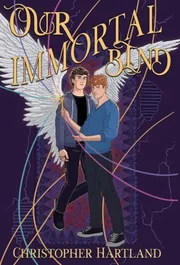

Evan Weaver, an English teenager from Elmwood Vale, keeps his warlock identity secret. Although magic is legal in witches’ and warlocks’ homes—as long as it doesn’t affect the mundane—only Gran, a witch herself, knew the truth about Evan, and she warned him that “People fear what they don’t understand, and fear makes them do terrible things.” Evan’s own father is a witchfinder, someone who hunts down witches and warlocks and strips away their magic. Orpheus, whose late father was human, has an angel mother who escorts the dead to the afterlife, but her keys have been stolen. Without them, the doors between the mortal and spirit realms can’t be properly locked, and no one can die. Orpheus’ mother, like the witchfinders, is quick to blame witches for the theft. While she must remain in the Hall of Styx, she sends Orpheus to the human world—in the form of a teenage human boy—to retrieve the keys. After they meet and he detects Evan’s warlock identity, Orpheus asks him for help with his mission. The novel would have benefited from further exploration and development of the story’s Greek mythology elements, but the white-presenting boys’ naturally progressing relationship is just as lovely as Orpheus’ declaration that, “Whether it’s romantic or platonic, love persists, beyond life.”