
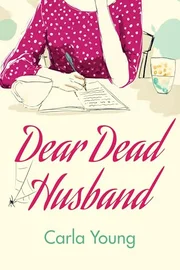

After five happy years of marriage, Eliza Talbot suddenly becomes a widow in her 30s. She’s coerced into therapy by Virginia, her annoyingly impeccable mother-in-law. Eliza becomes increasingly vexed by Virginia’s meddlesome antics, which include uninvited appearances at the cottage that Eliza shared with her deceased husband, Joseph, in the village of Dunsbury, England. She’s also irritated by Virginia’s self-appointed role as makeover coordinator for Joseph’s rose garden. The unsavory contributions of the Casserole Brigade, headed by nosy neighbor Mrs. Clark, intensify Eliza’s frustration—and complicate her digestion. Her therapist, Dr. Joyce, seems just as unhelpful when she advises her to write letters addressed to Joseph. But soon, Eliza writes: “Since you died, I have become a collector of platitudes.” She manages her animosity toward everyone in her life through an imagined connection with Hilda, a spider, and her actual friendship with Eleanor, a fellow support-group dropout. As Eliza’s “Dear Dead Husband” letters accumulate, she moves toward reconciliation with her high school best friend Caz and a possible romance with Eleanor’s adult son, David. Although the cause of Eliza’s sudden character growth toward the end of Young’s novel remains ambiguous, her achievement of emotional equilibrium is effectively foreshadowed in her letters’ evolving language: “No one wants witnesses when they’re gathering the sad, pathetic remains of their life off a heap on the floor. That is private.” Eliza’s pursuit of self-reliance as she struggles to evade Virginia and the Casserole Brigade makes for a rapid page-turner. While a few awkwardly coined polysyllabic words (platitudiest, fakeiarrhea, Halloweenafication) slacken the pace, the upbeat, humorous tone promises a satisfying conclusion.