
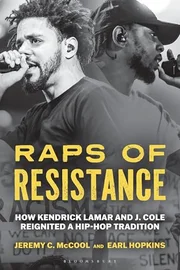

For many fans, the consensus “big three” rappers are J. Cole, Kendrick Lamar, and Drake, distinct artists from different backgrounds and with a history of collaboration. And, more infamously, feuding: Beef entangling all three consumed much of 2024, culminating in Lamar’s savage Drake diss track, “Not Like Us,” which won him a Song of the Year Grammy and brought him to the Super Bowl halftime stage. But that spectacle is part of a complex, much longer story about hip-hop’s ongoing engagement with social-justice themes. McCool, a professor at West Chester University, and Hopkins, an arts journalist, begin their story with hip-hop landmarks like “The Message” and exploring how the genre’s commercial growth in the 1990s both bolstered and complicated conscious rap—N.W.A and Tupac Shakur, for instance, could at once deliver potent criticism of racist policing while perpetuating misogynistic stereotypes. Cole, a native of North Carolina, broke through in the 2010s by delivering raps that openly addressed socioeconomic challenges in Black communities; raised in Compton, California, Lamar touched on similar issues in more personal ways, while songs like “Alright” were embraced as empowerment anthems within the Black Lives Matter movement. McCool and Hopkins lean heavily on biographical background on the genre in general and the two MCs in particular and too often decline into platitudes. (“With their combined releases, Kendrick and Cole have reached unparalleled heights.”) The book is at its strongest when discussing the “Not Like Us” contretemps, which to them represents not just a beef but a pivotal cultural moment that divided hip-hop fandom. A stronger book might more directly address the stakes of that split.