
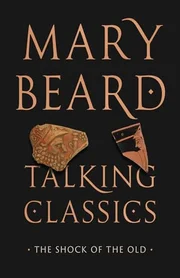

Someone who taught ancient Greek and Roman culture at Cambridge for 50 years isn’t going to say there is no point, but Beard is quick to assure readers, in the breezy tone familiar from her television work, that she will make her case “without resorting to the tired clichés often used.” She doesn’t necessarily think the classics are “good for you” or impart “timeless truths.” What first sparked her interest was a 4,000-year-old piece of Egyptian bread at the British Museum that a kind curator took out of its case and held at eye level, so that 5-year-old Mary could see it up close; she still recalls the thrill of “an ordinary fragment of everyday life made by, and for, people who were unimaginably distant from me.” That sense of both nearness and distance is a through line in Beard’s short text, based on lectures she gave at the universities of Chicago and Edinburgh. Yes, classical literature still speaks to us of common, human emotions, but the world limned in, for example, the Iliad and the Aeneid is one in which slavery is a given, women have minimal rights, and violence is glorified, she reminds us; those pristine, marble statues praised by 19th-century classicists were originally painted in bright colors, and ancient Greeks and Romans weren’t monolithically white either. The ancients lived in a multicultural world and grappled with issues of free speech, good government, and many others still debated today. As is often the case in academic texts, there’s a lot of “on the one hand, on the other hand” here, but that’s Beard’s point. “Classics teaches you to discuss constructively questions to which there are no right answers,” she argues. “Part of the unashamed mission of humanities education is to celebrate and face up to complexity.”