
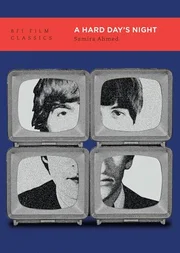

For all the ways that writers have anatomized the 1964 Beatles film A Hard Day’s Night, no one has approached it like Ahmed. An English broadcaster and the daughter of South Asian immigrants, she fell for the Beatles in 1979 at age 11 while watching videos of the band’s films. She views A Hard Day’s Night with an outsider’s eyes, concluding from a scene in which she identifies several non-white Beatles concertgoers that “Britain, for all its complicated social tensions, is captured in this film as having a multiracial reality.” This dovetails with a prevailing, persuasive contention of Ahmed’s: Unlike other British films of its time, A Hard Day’s Night manages not to seem old-fashioned when watched today. The author devotes the book’s first half to unpacking the movie’s plot (thumbnail: The Beatles commute by train from Liverpool to London, so they can perform on a TV show); the book’s latter half comprises chapters dedicated to, among other topics, and most illuminatingly, the film’s women. As Ahmed observes, they’re not just the screamers of the opening scene’s train-station chase: Female characters have jobs that keep Beatles business humming. Ahmed submits that “the film, while always making clear that the Beatles are lively young heterosexual men, never relies—in their encounters with females—on promoting the kind of stereotype that has dated so many British social realist films of its time.” Director Richard Lester’s other, like-minded choices (such as to ditch a scene from the script that contained what Ahmed calls “questionable racial humour”) reflect an aversion to mean-spiritedness, which may well be the key to why A Hard Day’s Night remains such a pleasure, as is this incisive, nimble title.