
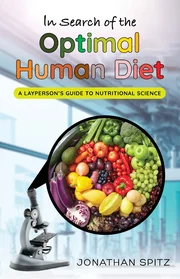

In 1974, the 21-year-old author, motivated by the early death of his father from a heart attack, embarked on an ambitious attempt to answer two deceptively simple questions: How does one determine the optimal human diet, and what diet would one discover with that method? Spitz clarifies early on that he’s neither a physician nor a dietitian but a “writer and self-taught student of nutrition” who approaches his vast subject with the zeal of a dedicated researcher. Beginning with humanity’s ancestral diet of fruits, shoots, nuts, and seeds, he traces the development of nutritional science from 18th-century chemistry through modern molecular biology. Along the way, he introduces readers to figures such as Antoine Lavoisier, whose work helped launch the chemical revolution, and 19th-century researchers who sought to unravel the mysteries of protein metabolism, carbohydrates, vitamins, and mineral absorption. He devotes entire chapters to the scientific community’s awakening to vitamins, minerals, essential amino acids, and deficiency diseases. Along the way, Spitz recounts animal experiments, epidemiological surveys, and wartime observations. The book also examines food policy from a deeply political perspective, digging into the United Nations’ first forays into food policy after World War II. Spitz discusses the work of such researchers as Denis Burkitt and Michael Greger, examining the specifics of what foods and medicines may affect diseases from diabetes to Parkinson’s. The evidence builds toward a central conclusion that nutritional science overwhelmingly supports a whole-food, plant-based diet. As Spitz writes, “When people eat a steady diet of meat, dairy, eggs, and processed foods, they set themselves up for a lifetime of chronic degenerative diseases.” Extensive appendices covering vitamin B12, vitamin D, fatty acids, sodium, food additives, genetically modified foods, and other topics round out Spitz’s lengthy work.
The book succeeds in introducing readers to an enormous body of research. Rather than a conventional diet manual with meal plans and practical advice, Spitz produces something closer to a history of nutritional science and metabolism, offering plenty to admire. Spitz has clearly immersed himself in an impressive breadth of information, and sometimes his playful asides help lighten the highly technical material. (“Ahhh…but now I’m getting ahead of myself,” he jokes at one point.) But it’s not always clear whether Spitz is writing a textbook-style history or a persuasive layperson’s argument for a plant-based diet. Lengthy discussions of biochemical pathways, metabolic cycles, chemical formulas, and historical experiments (including some rather gruesome ones involving animals) leave the book feeling more like a graduate-level survey course than a guide for general readers. Although his attention to detail demonstrates an impressive command of his subject, his broader arguments can feel frustratingly distant. Spitz’s ultimate case for a plant-based diet is persuasive by the end, and his synthesis of decades of research creates a compelling rationale for emphasizing whole-plant foods. But readers drawn in by the subtitle’s promise of a layperson’s guide may find themselves somewhat frustrated.