
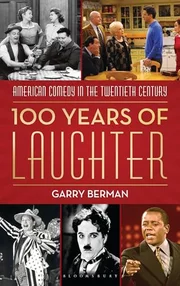

Berman, an author of multiple pop-culture histories, frames this story as one medium rapidly overtaken by another: Vaudeville was supplanted by silent films, then radio, then talkies, then variety television, then sitcoms. Each era had its superstars—Charlie Chaplin, Jack Benny, the Marx Brothers, Milton Berle, and more—not to mention its scandals. (Berman details the case of silent star Roscoe “Fatty” Arbuckle, whose career was effectively ruined by a sexual assault accusation.) Though Berman gives each decade equal time, he has his preferences, befitting the author of a book about ’30s comedy titled The Funniest Decade: Chaplin and the Marx Brothers were at their peak, radio comedy was ascendant, and troupes like the Little Rascals and the Three Stooges delivered a raft of one-reel classics. By contrast, Berman sees the ’80s as a comedic nadir, defined by a glut of mediocre stand-up comics and formulaic sitcoms. He covers pretty much every relevant big-name comic figure and makes room in the appendices for some interesting ephemera. (One brief essay goes deep on the history—and flavors—of slapstick pie fights.) His relative neglect of animated comedy—relegated to a two-paragraph speed run through The Flintstones, The Simpsons, and South Park—might be understood as a matter of taste. But a book about comedy should have more room for humor—quotations of actual jokes are surprisingly rare here, leaving newcomers informed about the importance of figures from decades past but perhaps wondering why all the fuss over Lucille Ball, Buster Keaton, Woody Allen, and beyond.