
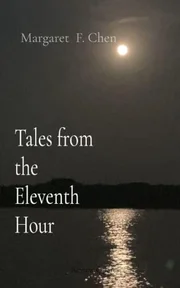

In this collection of five stories, Chen explores themes of emotional isolation and dissatisfaction; her characters navigate turbulent interpersonal relationships while contending with sadness. In “Perfect House, Perfect Life,” a wife and mother feels the walls closing in around her, an emotional parallel to her downsizing of the family’s residence due to an equally decreasing income. Violet Geddes is similarly despondent in “Meditations on a Winter’s Night.” Violet awakens with little memory of her attempted pill-induced suicide from the previous night, though she does recall fighting with her “impatient, arrogant” fiancé. Determined to continue with her day’s plans despite her mild nausea and her mother’s worries, she has lunch with her friend, Iris. Following the meal, Violet notes her detachment: “Iris stood…rooted in the city and in the forward-moving world, while it was Violet who was leaving.” Chen’s stories are particularly intriguing when they delve into the mystical, as when Nathan, in “Nathan and Natasha,” does channeling exercises that affirm his delusion-fueled manipulations of past romantic partners. This mysticism lends the collection a patina of otherworldliness, reflecting the characters’ separation from the bustling reality around them. This is especially evident in the first piece, “Song to the Moon,” in which a man travels in search of information regarding his late birth mother only to wind up in seemingly supernatural circumstances (“Despite his comfortable upbringing and many acquaintances and friends, he had often felt disconnected”). Chen’s prose displays real talent: “The overall atmosphere of the shared interiors is that of a dark and gloomy fortress, of a massive, once elegant project now in slow and valiant decline.” However, the text includes passages that fizzle out after needlessly lengthy descriptions, and could benefit from more rigorous proofreading. These issues aside, Chen’s stories have good bones and deftly examine the deeply human condition of loneliness.