
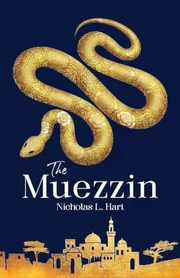

Louna, a rising pop star on her first stadium tour in Marseille, is a famous face hiding a buried identity. Backstage after her set, an intruder startles her with words in Arabic: “I found you, Jamila”—revealing by the use of her birth name that someone from her past has tracked her down. Ten years earlier, Jamila was a 13-year-old girl living with her twin brother, Ali, their traumatized mother, Amina, and their grandfather, Osama—a former Alnizam general, town surgeon, and hereditary muezzin—in a country just emerging from civil war. Forbidden as a girl from performing the call to prayer, Jamila secretly disguises herself as Ali and delivers the Fajr adhan twice, aided by Jamal, the mosque’s blind caretaker, who frames her act as quiet defiance (“They want you to fade into the background, to cover yourself, to become part of the supporting cast. Nothing more than a slave. So recite it, but make sure you do it just as you did last time. No need to be reckless. For now, consider this your covert protest to all that’s going on”). When foreign forces withdraw, the Alnizam regime retakes the town overnight, barring women and girls of school, work, and freedom of movement. Osama, wracked with guilt over his own past, quietly plans the family’s escape while publicly complying. Jamila performs the adhan a final time as deliberate protest. Fleeing the mosque, she’s abducted by Saeed, a vengeful, politically-connected man Osama once spurned; he rapes her in his kitchen, and she stabs him and runs away before collapsing near the family’s wadi hideout. She wakes to find her house burning amid a full military assault; Osama, rescuing her by ambulance with allies Sophie and Walid, tells her Amina and Ali are dead. At the border, soldiers are screening for them. Rather than risk her capture, Osama breaks her nose and drugs her to disguise her identity, confesses his love and his guilt, and sends her across with Sophie while staying behind to draw the pursuers off. Smuggled into France, Jamila is raised in Marseille by Sara, Sophie’s old friend, eventually becoming the singer Louna under a fabricated cover story. The present-day intruder reveals that Osama had lied to protect them all.
In this novel, Hart, a former UN humanitarian worker, effectively dramatizes a girl’s defiance of a theocratic regime, alternating a tense present-day concert scenario with flashbacks that explain where Jamila came from and the circumstances that made Louna. The structure deftly builds dread, and the novel takes on moral and emotional weight with the depictions the Alnizam’s ordinary cruelties: school bans, mahram rules, a predatory neighbor with political cover. Osama, the grandfather and ex-general whose guilt and love drive the plot, is the most fully-drawn character. The prose is plain and often didactic; Jamal’s long speeches on prejudice, for example, read more as authorial instruction than dialogue. The Marseille chapters idealize the city, and the ultimate reunion and resolution come quickly and lean on coincidence. The book is strongest when it stays close to the family’s fear and loyalty; its depiction of sexual violence is restrained but harrowing.