
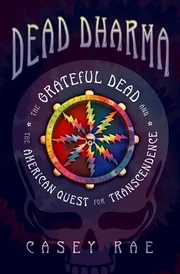

Rae, an author, academic, and musician, examines the Grateful Dead’s eventful history and “points to the unique fusion of the band’s ethos and praxis with elements of Buddhist thought.” Certainly, the band’s countercultural milieu was awash in Eastern and Native American spirituality, and, though none of the group’s members practiced Buddhism as such, many of their precursors, peers, and followers did. Moreover, the Dead frequently emphasized the spiritual aspect of their project, placing it squarely in what Rae’s subtitle calls “the American quest for transcendence.” Rather than offering a traditional history or bold claim about the band, he follows the Dead’s own approach, which he describes as “a web of interconnections, a participatory exploration rather than a fixed position.” Each chapter catalogs the points of contact between the Dead’s lyrics, interviews, experiences, and psychedelic adventures with Buddhist beliefs and practices. The author casts Beat icon Neal Cassady, who inspired the Dead, as a mahasiddha, who transmits Buddhist wisdom and practice. One Dead lyric evokes samsara, the cyclic realm where nothing is fixed, while another “carries the tender weight of dukkha—suffering born of separation and change.” A typical Dead concert resembles a bardo, a transitional state between death and rebirth. Reflecting on the lethal Altamont concert of 1969, Rae wonders whether the Grateful Dead saw the Hells Angels, the violent motorcycle gang, as dharmapalas, the “fierce manifestations of energies meant to safeguard the spiritual path and its practitioners from destructive forces and obstacles.” He also suggests that Buddhist teachings would have diminished lead guitarist Jerry Garcia’s need for opiates, which imperiled his health and the band’s fortunes. Readers will learn a great deal about the Grateful Dead and Buddhism, and Rae grounds his study in the secondary literature on both topics, but the sprawling discussion, autobiographical asides, and strained comparisons may test their patience.