
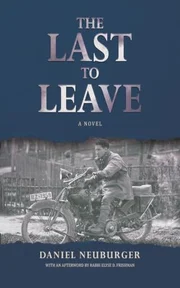

The author is the descendant of Jewish Germans who were sent to concentration camps when Nazism rose in their country, while the rest of their family were able to immigrate to the United States throughout the 1930s. In these pages, Neuburger offers a partially fictionalized account, focusing on three connected German nuclear families over two decades as antisemitism and nationalism spiraled out of control in their home country. The book begins with the author’s relative, Selma, meeting her future husband, Jacob Herrmann. At Selma and Jacob’s wedding, Selma’s brother Julius meets the Herrmanns’ close friends, the Heidelbergers, and is immediately smitten with their daughter, Rose; the two have an epistolary love affair for years before they finally marry. The novel recounts the extended family’s struggles and joys, their horror at their neighbors turning against them, and their varying opinions on whether leaving a country they regard as home is the right decision: “For so long, he had believed being a loyal German and a faithful Jew weren’t mutually exclusive. That belief now wavered,” thinks Sigmund, Selma and Julius’ father. In a well-structured narrative with skillful prose, the author chronicles his characters’ inner lives as they experience hopes and fears, both due to their historic circumstances and independent of them. Neuburger deftly portrays disturbing instances of discrimination and small acts of bravery from non-Jewish people, as well as instances of pure luck that saved people’s lives. The novel, augmented with some photos from the author’s family’s archives, is a loving testament, framed by broader questions about how hate can spread throughout a community.