
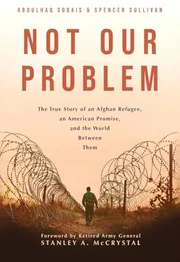

In their debut collaboration, Sodais and Sullivan trace their parallel paths throughout the U.S. invasion of Afghanistan at the start of the 21st century. Sodais was a young Persian-speaking Afghan at the time of the rise of the Taliban, which was brutal for him. “The Taliban used their position of absolute power to punish and humiliate people who did not align with their version of Islam,” he writes. “It was another lesson in the use of violence I would learn all too young.” In 2012, he was commissioned to work as an interpreter for an American platoon and met U.S. Army officer Sullivan. The two soon formed a working relationship and then a friendship, and the narrative shifts between their viewpoints. Sodais remarks on the oddities of the U.S. military he observed as he accompanied Sullivan on his various missions, and Sullivan reflects on the unforgiving country he was invading at the behest of his government. “Life is cheap in Afghanistan, and violence part of its long, bloody history,” he writes. “What we took as jest or perfectly acceptable in the western world could be seen as unforgivable transgression in the East.” The contrasting perspectives render the book compelling and readable. The story becomes even more darkly gripping once the narrative reaches the chaotic U.S. withdrawal from Afghanistan in 2021 and the resurgence of the Taliban, which left Sodais scrambling to stay alive and escape the country, which proved incredibly dangerous and difficult. “I wanted to leave, and they wanted me gone, so why was it so difficult to actually do it?” Sodais wonders at one point. “Why was there such a strict jail sentence for refugees caught trying to leave?” Both Sodais and Sullivan are genial presences on the page, providing strikingly human responses to the war.