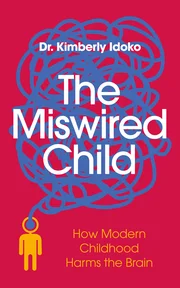

The author is a neurologist and children’s rights attorney who understands the importance of identifying the factors that affect children struggling to thrive in our modern world. She tackles systemic issues head-on and identifies the five main systems that put children at risk. “Big Food” prioritizes shelf-stability and immediate appeal over health. “Big Pharma” has turned tools for short-term stabilization into “instruments of long-term management.” “Big Medicine” often undermines parents’ own instincts. “Big Government” shoves additives into school lunches, and “Big Media” prizes profits over what is best for the audience. The result of these influences, per Idoko, is a generation of children at risk of becoming disconnected from the innate biological systems intended to regulate and promote their development; their bodies work to compensate for as long as they can, then collapse begins. Such collapse takes the forms of language and social regression, sleep changes, disruptive behavior, withdrawal, and an ever-increasing dependence on the very systems that are causing harm. Many of the interventions the author proposes involve dietary shifts and careful record-keeping as a means to help parents advocate for themselves, even as the systems in place dismiss their concerns (Idoko argues that the path toward a solution relies on parents trusting their instincts). The author’s text is direct and free of jargon as she describes the experiences of parents and offers immediately actionable steps. Idoko effectively articulates the challenge of bridging the gap between parents’ experiences and the scientific establishment: “What can’t be monetized gets underfunded. What’s underfunded looks unproven. What looks unproven gets ignored.” While the nuances of the author’s argument occasionally risk getting lost amid a sea of memorable one-liners (“when rhythm breaks, biology breaks”; “compliance isn’t development”), ultimately, her message is clear: In an age of “Big” systems, parents must trust both the science and themselves.