
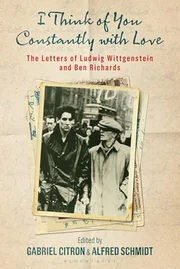

This extraordinary volume of letters offers an intimate portrait of Ludwig Wittgenstein, not as the granite logician of legend, but as a man unguarded, needy, joyful, and often undone by love. Written between 1946 and his death in 1951, the correspondence with Ben Richards, a medical student 35 years his junior, documents what Wittgenstein called “man’s greatest happiness.” The letters are disarmingly plain; they were edited by Citron, assistant professor of religion at Princeton University, and Schmidt, assistant director-general of the Austrian National Library. The letters track weather, train times, tooth extractions, flowers coming into bloom. Dried leaves are enclosed; cartoons are sketched; music is recommended with missionary zeal. Yet threaded through this domestic hubbub is an emotional intensity that can feel unbearable at times. “I want to tell you how much I love you & how much I need you,” Wittgenstein writes, again and again. Richards’ letters strain to meet this need without being consumed by it. That imbalance is the book’s quiet drama. Wittgenstein knows he is dependent; worse, he knows his dependence can wound. A dispute over Richards growing a beard becomes a startling meditation on love, possession, and the sacredness of the beloved’s face. Elsewhere, Wittgenstein’s self-abnegation (“there is really nothing in me that is lovable”) borders on emotional blackmail. The historical context matters. Sex between men was illegal in Britain; the language available was that of “romantic friendship,” intense yet circumscribed. What survives, improbably, is joy. In his final letter, Wittgenstein thanks Richards for having made his life “different altogether.” These are love letters, and show how thinking, for Wittgenstein, was inseparable from feeling; and how love could both steady him and push him perilously close to the edge.