
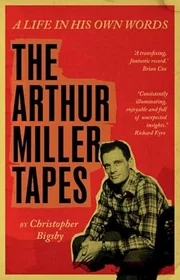

Bigsby met the playwright in the 1960s, founded the Arthur Miller Centre for American Studies at the University of East Anglia in 1989, and has written extensively about his life and work, so his questions throughout the book are knowledgeable, though there’s little new here. The devastating impact of the Great Depression is a constant refrain, and its influence on Miller’s work is evident: “It meant that nothing man-made existed which could not be sharply changed, overthrown and turned into rubble at a moment’s notice.” This sense of existential uncertainty characterizes his plays, from All My Sons and Death of a Salesman through After the Fall and The Price, to such later works (better received in Britain than in America) as The American Clock and The Ride Down Mt. Morgan. Miller’s progressive politics are also evident in sharp comments about the House Un-American Activities Committee trying “to force people to renounce the whole era of the thirties and forties in which certain social ideals were dominant.” Miller remained true to those ideals throughout his career, though his commitment to equality and social justice was tempered by an unsparing view of human frailties and cruelties that often makes him sound like a crochety old man. Bigsby isn’t afraid to press Miller on touchy subjects like his support of the Soviet Union well into the 1940s or his marriage to Marilyn Monroe. Responding to a comment about “how baffling” many people found that marriage, Miller replies, “There is something baffling about all my relationships. I cannot say I understand more than a fraction of them, quite frankly.” It’s both an honest statement and a means of shutting off further discussion, and Bigby generally lets Miller point the conversation where he wishes.