
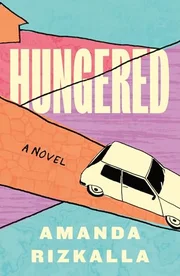

The story begins just after 12-year-old Sofia’s mother leaves her “baba,” moving Sofia and her brother into their car. As her mother drives around looking for a spot to park each night, Sofia’s mind wanders from memories of her “abuelo stirring a large pot of champurrado” to the girl with the “belly bulging out of her shirt” who now inhabits Sofia’s old house. The story unfolds in brief diarylike snippets from Sofia’s point of view, tracing her attempts to regain normalcy amid a destabilizing reality. Rizkalla is skilled in taking on the voice of a young narrator, fluent in the worries that plague Sofia, whether they come from her school crush, her teachers’ racism, or the responsibility she feels for her family’s well-being. Rizkalla is able to succinctly conjure the shame that stems from Sofia’s class consciousness while not losing the innocence of her youth: “The way Chloe looks down at my hands after we pull away, I can tell she expects me to give her a present, that she thinks I must have been hiding one this whole time to surprise her.” What makes this a memorable debut is Rizkalla’s ability to artfully detail the gut-wrenching powerlessness Sofia often feels as she treads through a world rife with inequality. “I mouth the word to myself, ‘Please,’ imagining what it would be like to show up to the car with a gift card in hand, how proud mama would be, and maybe she would even tear up holding it, she would be that proud,” Sofia thinks, hoping to get the gift card awarded to the highest scorer on a class oceanography quiz. Rizkalla offers a well-written and haunting look into a childhood marked by instability.