
<
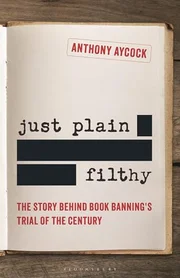
Many books have been freed from censorship by courts, James Joyce’s Ulysses and D.H. Lawrence’s Lady Chatterley’s Lover being only two of the most noteworthy. Aycock, a North Carolina writer and librarian who has devoted much of his life to the freedom of literary access, argues that another case matters. In 1982, the Supreme Court heard Island Trees v. Pico. “In the process,” he notes, “it gave us the first—and so far, only—library book ban case to be decided by the United States Supreme Court.” The case dates to 1975, when the Island Trees Union Free School District, on Long Island, sought to ban 11 books from its libraries, including Kurt Vonnegut’s Slaughterhouse-Five, Richard Wright’s Black Boy, and Oliver LaFarge’s Laughing Boy. “No one had complained about these books,” he writes. “There had been no challenges, no letters to the editor, no public shouting matches. …The board simply acted. Like a sleeper cell.” Was removing these books a violation of the First Amendment? The court split. But what matters is the larger question of how potentially transgressive or challenging content can help young people make personal and social decisions. Each of the books in the case gets a full reading here, and the payoff is this: “Teens want sexual information. They need it. …When people search for information, they usually have one of three goals: to seek answers, to reduce uncertainty, or to make sense of a situation.” These goals, for Aycock, constitute the social function of literature. They also constitute the personal impetus for his book. “I entered middle school in 1985 and never received any sex education at all,” he writes. “Is it any wonder I turned to novels?” What makes the book more than a screed against the censor is the author’s unique personal investment. As he says, books teach what cannot be taught in class.