
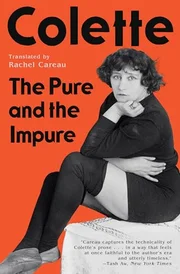

A narrator who resembles her author both in name and occupation guides readers through the sexual proclivities and shades of gender expression that populated belle epoque Paris (with a brief digression to Georgian-era Wales). In cafes, cabarets, and opium dens, she introduces us to what translator Careau calls “the sexual underworld”: lesbians and gay men, women who dress in men’s clothing, a sneering, misogynist Don Juan, and others—many of whom wouldn’t have used the same language to describe themselves that we use now. (Careau believes that at least one of those cross-dressing women would likely have been a transgender man if she’d lived in our own time.) And as Careau notes in her informative if occasionally stiff foreword, the book itself evades categorization of all sorts—it’s neither pure fiction nor nonfiction, and that narrator is a lot coyer than Colette’s own life might lead us to believe. For periods of time, Colette dressed in men’s clothing and took women lovers, but you wouldn’t know it based on this account alone. Her descriptions can seem harshly—even cruelly—outdated: Of a circle of gay men, she writes, “I will carefully avoid saying that they were not manly.” Of the cross-dressing women, she accepts without complaint this question from an interlocutor: “What’s more ridiculous, and sadder, than a…simulated man?” But it’s never entirely clear where Colette’s irony ends and her sincerity begins—nor who might be considered “pure” or “impure.” As Careau notes, Colette’s work would have been wildly broad-minded at the time—and for the most part, her tone is more sympathetic than cutting, eager to unravel the many, many different layers of “my favorite form of brutality, love.” As a whole, it’s best read not as a comprehensive guide to gender and sexual desire but as a singular account—one that was very much of its own time and yet, paradoxically, far out in front of it.