
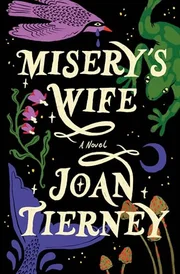

“What must be understood about tales like this one is that hardly any story has a true beginning”: So begins Tierney’s debut novel. In a village stuck between the intruding ocean, sky, and forest, four sisters find themselves in the middle of a queer retelling of a Portuguese folktale. Elixane, the youngest and the daughter of luck and fortune, only remembers her older sisters in “faded scraps of memory.” Years earlier, they were stolen by their future husbands: Adelina, child of the night and sea, married the king of the ocean; Borboleta, child of the day and sky, married the king of the air; and Dores, child of the wind and rain, married the king of Misery. Their lives and marriages are a blend of beauty and horror, joy and fear, fulfillment and longing. When a plea for help reaches her from Dores, Elixane sets off on a hero’s journey full of adventure, danger, and anthropomorphic animals. With a little help from her previously unknown lifelong companions—Marquês Boaventura, known as Luck, the clever and foolish lord of good luck, and his mischievous and gorgeous sister, Marquesa Másorte, or Jinx, the marquesa of misfortune—Elixane tries to break magical curses, stop an unending war, and save her sister from the king beyond death. Tierney renders Elixane’s transness and queerness in beautifully understated ways. Describing how Elixane was at first mistakenly believed to be a boy, the narrator says, “These things happen, and are remedied easily enough once the child can put a voice to the truth.” And Elixane lives her truth unapologetically, if a little nervously, especially around Jinx. If the repetitive nature of the narrative device leaves little space for suspense, Tierney’s poetic prose consistently elevates the tale. The novel particularly shines when exploring sisterhood, grief, trauma, and the process of stepping confidently into one’s power.