
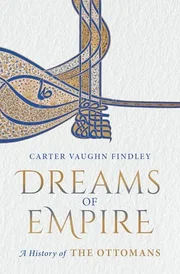

Findley, professor of History at Ohio State and author of The Turks in World History (2004), writes that the Ottoman Empire lasted six centuries under a single dynasty because Islam permits a man to have four wives, and the children of concubines are easily legitimized. With so many male heirs, until around 1600, it was routine for a new sultan to murder his brothers. Findley begins as Turkish nomads from the steppes migrated to the Middle East around 1000 and converted to Islam. By 1200, they formed the Seljuk Empire, which competed with Islamic Persia and Egypt as well as the declining Byzantine Empire, which occupied southeast Europe and the western edge of Anatolia, present-day Turkey. Ottoman founder Osman I (c. 1258-1324) led a tribe in northwest Anatolia. His successors conquered more territory, replaced the Seljuk Empire with their own, and, in 1453, captured Constantinople, becoming the terror of Europe. By the 16th century, Ottomans ruled Mediterranean lands and Europe as far as Vienna. This marked their peak, but the belief that three centuries of decline followed has been called into question by contemporary scholars, the author included. After a difficult 17th century, matters improved in the 18th, until the disastrous final decades, featuring Russian and Napoleonic conquests. Entering the 19th century as the “Sick Man of Europe,” the Ottoman Empire lost colonies a century before European powers lost theirs, but, Findley reminds readers, Turkey was the only World War I loser that benefited. Despite losing its remaining colonies, it successfully rejected Treaty of Versailles reparations, defeated a Greek invasion, and became the most stable and Western-oriented Islamic nation. Dense with battles, politics, unfamiliar names, and Turkish and Arabic terms, this should not be an introduction to the empire. For that, try Jason Goodwin’s Lords of the Horizons (1998).