
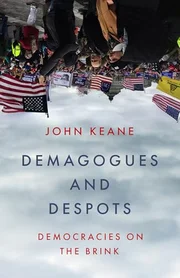

Demagogues have always had a bad rap, understandably, but since the turn of this century, voters throughout the world have elected them to national leadership. Keane, professor of politics at the University of Sydney in Australia and author of The Shortest History of Democracy (2022), asserts that modern autocrats eschew the mass brutality of their 20th-century counterparts. “Those who think despotism is a synonym for repression, fear and raw force are profoundly mistaken,” he writes. “Despotic power can’t properly be understood through similes of hammers and nails; it requires thinking in terms of the attraction of metal filings to magnets.” The author asserts that the U.S. is an empire in decline and no longer the beacon of peace and freedom it once proclaimed. President Trump publicly disparages liberal democracies in Europe; praises autocratic leaders of India, Turkey, Argentina, and the Middle East; and admires Vladimir Putin. The media, including traditional conservative outlets, disapprove, but the majority of Americans who elected Trump in 2024 seem to have no objection. Modern demagogues take advantage of modern communication, especially social media, to fascinate their followers, but their message is ancient, Keane writes: “It’s an old dynamic whose ancestry stretches back to ancient Greece.” Loathsome enemies threaten our nation; together we will smite them—this was the platform of their 20th-century counterparts, and it remains appealing to many. Foreigners (immigrants, nowadays) are depicted as an age-old threat, but today’s demagogues emphasize those supposedly destroying us from within, the author maintains: radical minorities and the America-hating journalists and “elites” who fawn over them.