
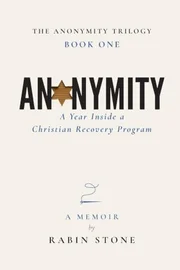

The “Farm” is a former elementary school converted to the campus of a Baptist women’s recovery program. The author, who is Jewish, arrived there when her financial and social support networks disintegrated and she had lost custody of her children. Through flashbacks, Stone reveals that her once-happy life, full of middle-class creature comforts (“soft bed with organic sheets”), fell into shambles when her husband had a psychotic, alcohol-induced break. The author initiated divorce proceedings, but she didn’t have control of the family’s finances or a job to support herself and her kids. She also didn’t have anywhere to live, and the Covid-19 pandemic meant she couldn’t rely on friends and family to offer up their homes. After agreeing to sign over the house to her soon-to-be ex-husband and falling behind on rent payments (due to lack of financial support from her children’s father), she was eventually forced to sleep in her SUV or crash at homeless shelters. These events lead Stone to apply to stay at the “Farm”; at this evangelical recovery program, she was singled out because she was Jewish and found it difficult to keep kosher or observe Shabbat. The memoir vividly captures the author’s struggle to avoid conflict as a religious outsider among so many women who lacked emotional self-regulation. Unfortunately, the text is often repetitive, with many chapters hammering home the same points. On a sentence level, Stone often defaults to a formula of drawing out an idea by tacking on a series of sentence fragments (“I know what is living in those unmoving bodies. Memory. Calculation”) or relying on iterative phrasing (“We pass security. We pass the holding room with its lockers and piled belongings. We pass men leaning halfway into our path on the stairs”). These stylistic choices tend to drag down the pacing and read as simultaneously abstruse and simplistic.