
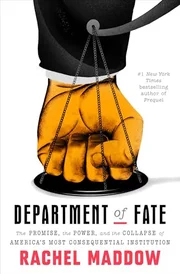

Created by Congress in 1870, the Department of Justice, has, on occasion, been a force for the good, writes Maddow, MS NOW host and author (Drift, 2012, etc.). More often, she adds, it has been abused to protect the interests of corporations, corrupt politicians, and self-serving presidents. In her fiery retelling of the DOJ’s checkered history, there are few untainted heroes. In the 1860s, Amos T. Akerman, President Grant’s attorney general, courageously prosecuted murdering Klansmen in York County, South Carolina. A century later, John Doar, the assistant attorney general in charge of the DOJ’s Civil Rights Division, was fighting a newly emboldened KKK in Alabama. Actively undermined by FBI Director Edgar J. Hoover, he nonetheless secured convictions of the killers of civil rights activist Viola Liuzzo. But in Maddow’s gallery of attorneys general, the scoundrels and “narrow-minded and partisan hacks” predominate: Richard Olney, who cozied up to railroad magnates and jailed labor organizer Eugene V. Debs; Harry Daugherty, who under Presidents Warren G. Harding and Calvin Coolidge used the office to line his own pockets; Ed Meese, “Ronald Reagan’s loyal and faithful parrot”; and, most consequentially, William Barr, who, under President Trump, “levered the power and the prestige of the Department of Justice to save the president’s bacon.” The author’s style is delightfully caustic, even Twainian, as when she characterizes the DOJ under Daugherty as a “a ten-story bribe department store” and designates a DOJ recommendation that Trump be publicly cleared of election interference a “Cover Your Ass memo.” Written with a novelist’s skill for revelatory detail and a historian’s sharp eye for continuities, the book both infuriates and inspires. The moral indignation seething through Maddow’s account culminates in her conclusion, in which she calls on Congress to beef up the DOJ’s Office of the Inspector General and reminds us of the department’s long-forgotten purpose: “to fight for everyone in America to have the protections of the U.S. Constitution, including against their own government.”