
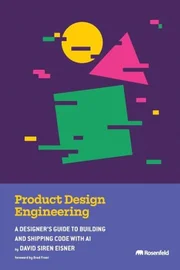

“For a long time, designers on software teams were expected to stop before their work was built,” writes the author. In traditional workflows, the role of designers “was to imagine the experience, explain it clearly, and then hope the important parts survived the trip into code.” Although he’s long believed that product designers should learn how to write code themselves (because that’s “where the product becomes real”), the rise of AI has made integrating code into a designer’s skill set more viable. In this handbook, intended for product designers and the engineers and managers with whom they collaborate, Eisner blends advice from firsthand experience with practical tools. He first provides a brief tutorial on the terminology, practices, and resources one needs to understand codebases. From there, he devotes the bulk of the book to a step-by-step process, accompanied by training exercises, which covers such topics as running code locally, testing and debugging, and creating shipping codes and pull requests, all with AI assistance. Finally, Eisner offers advice on how readers can introduce this new approach to design within their own workplaces and makes the case that the “future of design is building.” Doing so not only leads to improved performance, he asserts, but will also result in better products for customers. Eisner, the vice president of product design at tech company Datadog, employs principles from the hands-on training program that he created for his own design team, and he subsequently taught the approach more broadly. He includes text-box asides in several chapters featuring the perspectives of other designers across the U.S., while “In the Real World” vignettes provide testimonials from professionals on how they use AI-assisted coding. This concise, user-friendly guidebook is designed to be used as a reference long after an initial read; to that end, Eisner offers “Debrief” summaries of each chapter.