
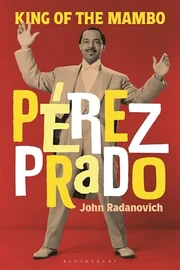

“It is still not widely known in the United States just how deeply mambo and Cuban son seeped into American popular music,” writes Radanovich Wildman of Rhythm: The Life and Music of Benny Moré (2015). In this biography of bandleader, composer, and “King of the Mambo” Pérez Prado, Radanovich seeks to remedy this by using Prado as a focal point in a cultural history of the mambo. From Prado’s birth in East Matanzas, Cuba, in 1917, to his death in 1989 and beyond, the author traces the mambo’s evolution from the slower danzón to Prado’s greatest successes, such as his numerous film roles or his Billboard #1 song, “Cherry Pink Apple Blossom White.” The book is most compelling when delving into Prado’s character, such as when the author cites Margo Su, a staple of 1940s Mexican nightlife, in describing Prado as a “diva” who “bought a Cadillac and had the seats covered with tiger skin, wore heavy shiny gold chains adorning his neck and wrists.” Unfortunately, these insights are rare—Radanovich didn’t use many interviews, correspondence, or other primary materials; so much of the book reads like an informational guide to mambo. Still, he succeeds in conveying how radical this music was, from the “strident violence of his saxophones and trumpets” to threats of Prado being excommunicated from the Catholic Church because he was “the true incarnation of the devil.” The author also deftly notes the mambo’s underappreciated influence: “If you took away syncopated Cuban rhythm from early R&B and rock and roll, we would have a very different musical heritage.” It’s a perfect introduction to this style of music, though readers interested in the music theory of mambo or insight into Prado’s compositional process might want to look elsewhere.