
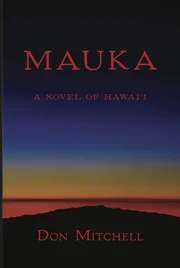

June Nakashima, whose working-class Japanese American family lived in a section of Hilo known as Kimiville, lost her parents in the 1960 tsunami that devastated the region; when she was a teenager, she also experienced the trauma of being raped by a group of teenage boys. When June and her former classmate Max Nelson meet during a local footrace, 58 years after their high school graduation, they already have fond memories of each other. Their bond strengthens quickly when they learn that they’re both trying to write about troubling memories of long ago. The couple start sharing their writings with each other, and although these parts of the novel ably depict the creative process, they also slow the action considerably. June’s use of an alter ego in her writing, “Shy Japanese Girl,” does enrich her story, but Max’s tale is simply one of academic disappointment and immature rage. That may be the author’s point, but if so, why have the pair fall deeply in love and share so much of their carefully crafted art? Early on, readers learn that Max has a murder inquiry hanging over his head as well, but that subplot has very little to do with Hawai‘i itself, as much of the narrative does. The author’s deep appreciation of the area’s geography, botany, and people shines through, as when Max describes one route around Mauna Kea: “The views are spectacular and you go from forest to moonscapes and back again, and there are silverswords and black sand dunes and yellow Hawaiian raspberries, and there’s never anybody around and it’s just glorious. Often there’s fog, but that can be beautiful too.” As June and Max’s relationship progresses, they take many hikes through the island’s different ecospheres, sometimes reaching heights with polar-tundra climates; these accounts are fascinating in themselves and emphasize how even the strongest partnership can falter when the terrain gets tough.